By Allan Kai
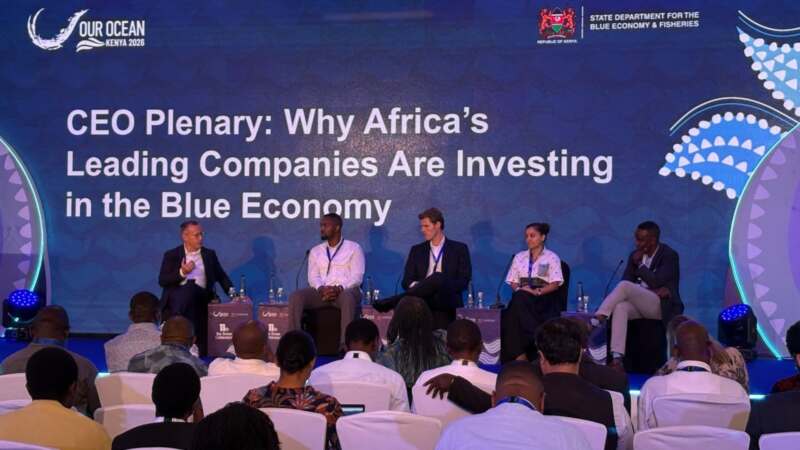
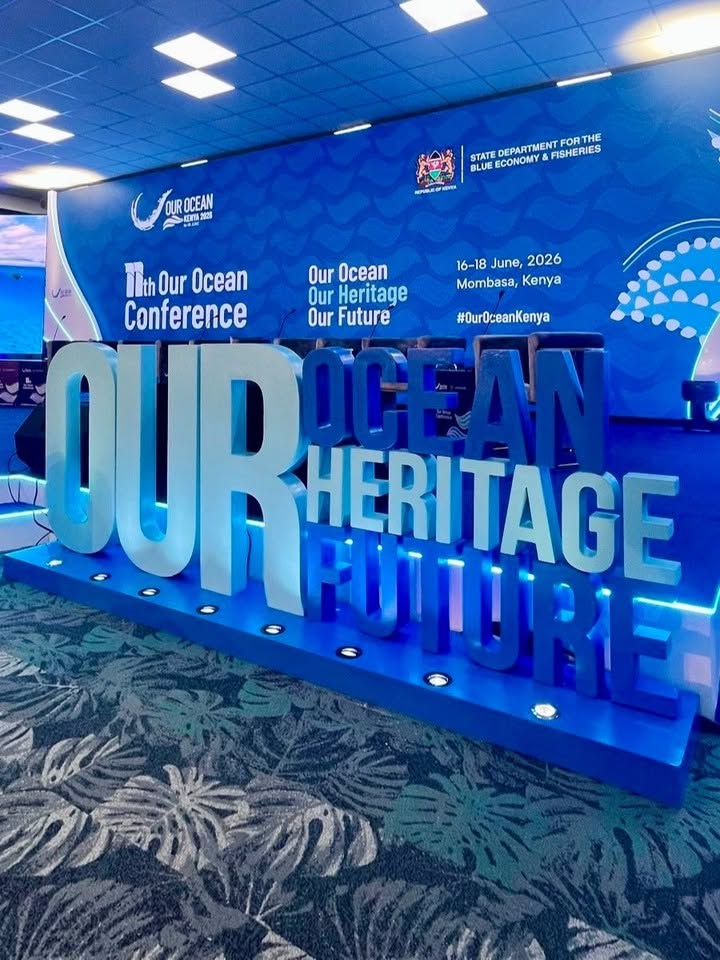
When global leaders gathered in Mombasa for the 11th Our Ocean Conference (OOC11) in June 2026, the headlines were filled with billions of dollars in ocean commitments, conservation pledges, and calls for stronger climate action. Among the many announcements, one launch quietly signalled a new chapter for Africa's blue economy—the unveiling of the 1000 Ocean Startups (1000OS) Africa Regional Community.
Why 1000 Ocean Startups Matter
The blue economy is often described as Africa's next economic frontier. From fisheries and aquaculture to marine tourism, renewable ocean energy, coastal conservation, shipping, and marine biotechnology, the continent possesses immense ocean resources capable of creating millions of jobs while protecting marine ecosystems.
Across Africa, innovators are developing solutions to reduce plastic pollution, improve sustainable fishing, strengthen aquaculture, restore mangroves, and help coastal communities adapt to climate change. Yet many struggle to find investment, technical support, markets, or even visibility.
David Oginga, CEO Sote Hub, an entrepreneur support organization (ESO) and a strong voice in the blue economy sector in Kenya and East Africa, believes there is reason to push for visibility for startups in Africa’s blue economy because statistically, considering the investment coming into the continent for startups, only 1% is geared towards the blue economy.
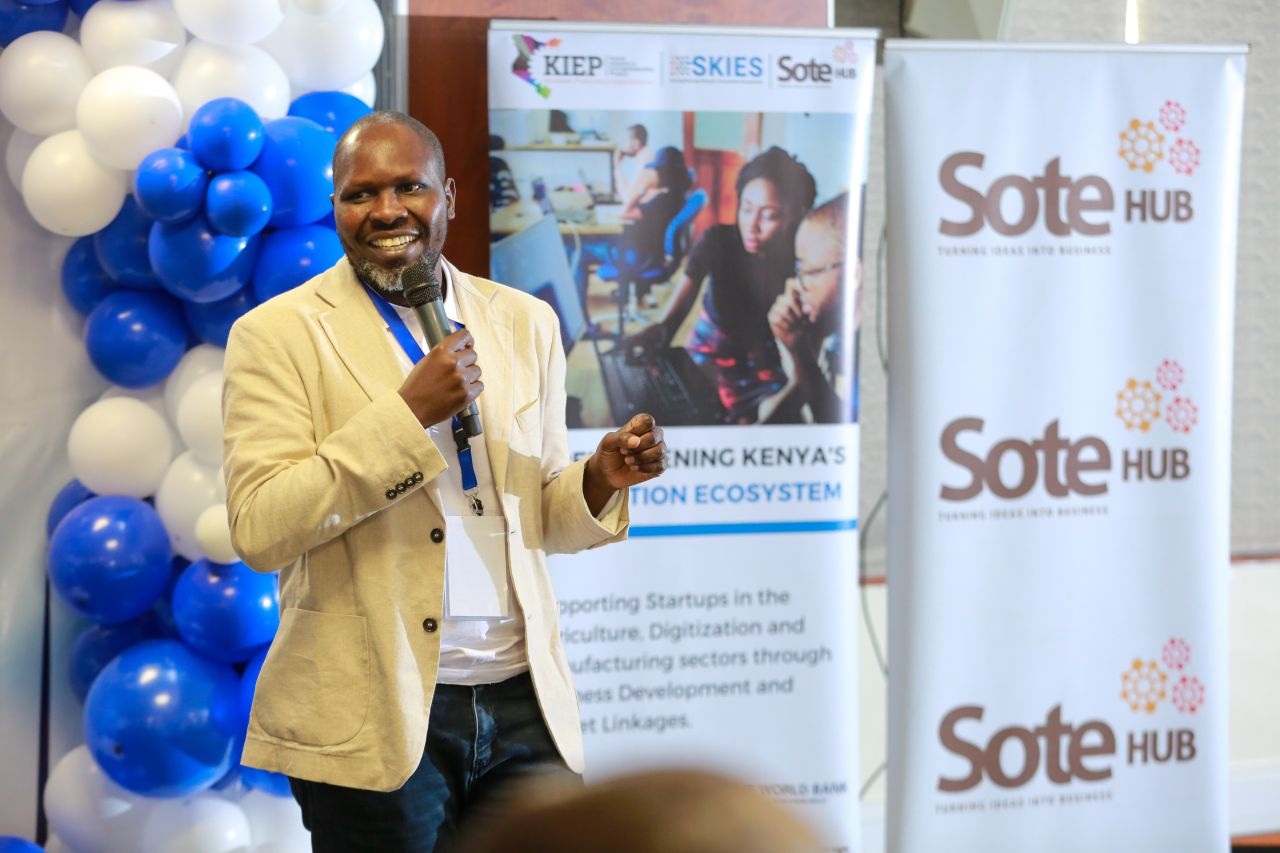
Sote Hub CEO David Oginga, a key figure in the ESO space in Africa, addresses attendees at the KIEP-SKIES graduation last year.
"We need to drive more investment toward the blue economy through venture capital, philanthropies, and angel investors. However, a major hurdle remains the shortage of viable, scalable business ideas in the ocean space necessary to attract that capital," Oginga said in an interview with Blue Radio.
The aspect of numbers also brings in the issue of not having enough ESO hubs on the continent given that “only Sote Hub and OceanHub Africa are focused on ocean innovation, with most hubs tending to be sector agnostic." He added that “there is more that we can do together from the African context in terms of data and intelligence sharing to help understand the aspect of cross incubation for startups among hubs.”
Announced during OOC11 in Mombasa, the initiative brings together entrepreneur support organizations, investors, development partners, corporates, philanthropies, and innovators into one coordinated network dedicated to accelerating Africa's ocean innovation ecosystem. Rather than creating another standalone program, the coalition aims to improve collaboration, reduce duplication, and connect entrepreneurs with the capital, partnerships, and expertise they need to grow.
A Global Movement with African Ambitions
The 1000 Ocean Startups Coalition is already one of the world's largest collaborative networks supporting ocean innovation.
Its global membership includes 68 organizations ranging from investors and venture capital firms to entrepreneur support organizations and innovation platforms. Together, coalition members have supported more than 900 ocean-impact startups operating across more than 90 countries, helping build a portfolio valued at between US$11.3 billion and US$14.9 billion. Perhaps more importantly, more than 80 percent of coalition members actively collaborate through investment partnerships, program delivery, and deal-sharing.
The Challenge Isn't a Lack of Ideas
On the backdrop of the launch of a report compiled following a private community breakfast that brought together Africa's leading ocean entrepreneur support organizations (ESOs), investors, innovators, and ecosystem partners, the OOC11 dubbed “Bridging Africa's Ocean Innovation Continuum” challenges went beyond the funding aspect.
The report mentions that although African startups make up around 9 percent of ventures supported by the coalition, they account for less than 2 percent of the coalition's recorded valuation. The report also reveals that African ocean startups are significantly less likely to have publicly recorded valuations, making them less visible to investors despite achieving survival rates similar to startups elsewhere in the world.
“Beyond the capital funding challenge, I believe once we are able to take care of good sustainable production of different value chains in the ocean space, then it triggers the overall value chain development on the processing side, and then later we can catalyze other areas of intervention such as the marketing side and the technology and innovation side,” said Oginga.
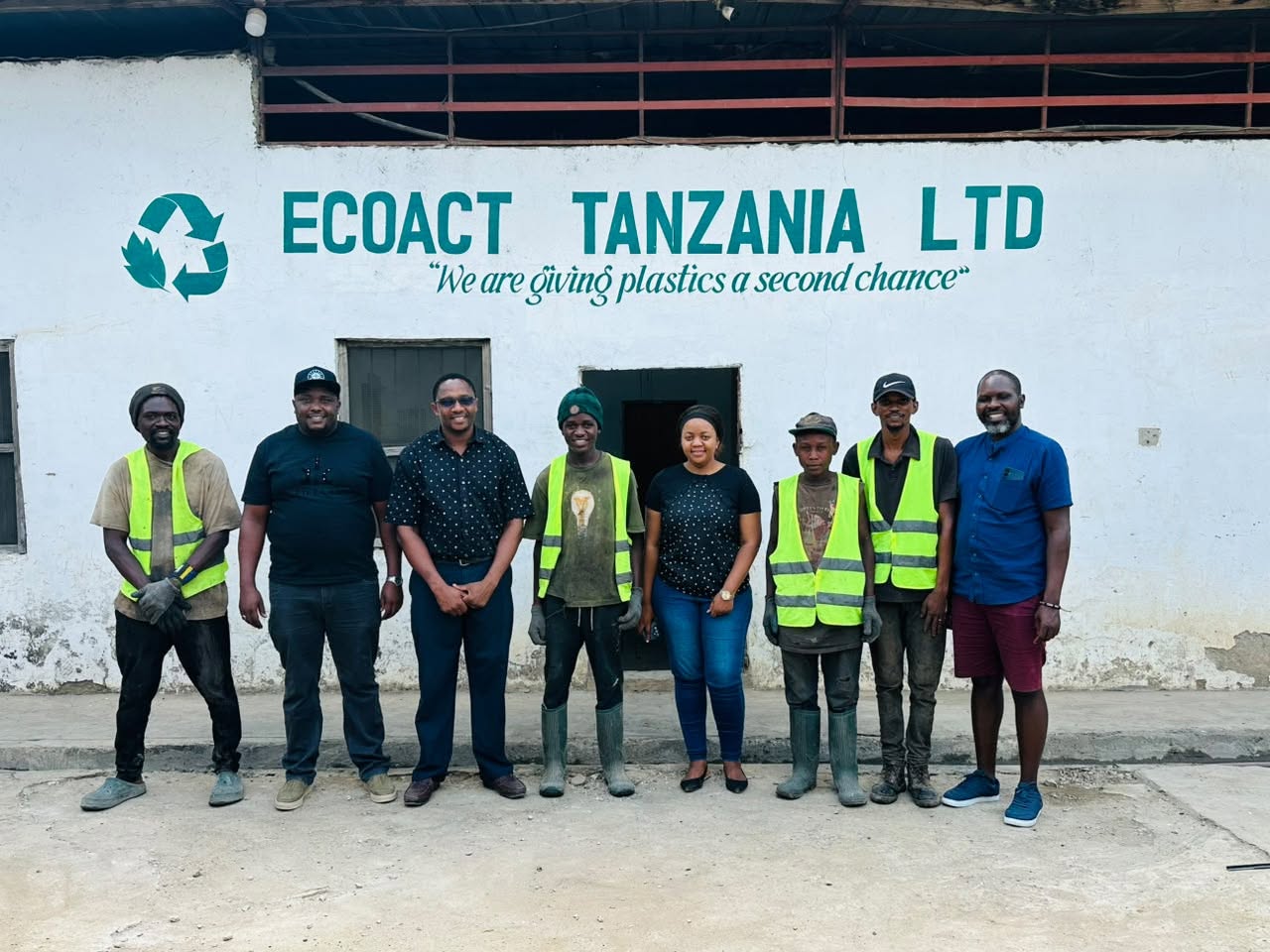
Sote Hub team visiting a plastic recycling startup, ECOACT, in Tanzania
Every African startup surveyed reported creating positive social impact alongside business growth. Nearly seven out of ten are already contributing directly to marine conservation, more than double the global average. The continent is also demonstrating stronger gender inclusion, with countries such as Kenya and Tanzania recording significantly higher rates of female founders than the global average.
These findings challenge the long-held perception that Africa's blue economy is underdeveloped because of a lack of entrepreneurial talent.
Instead, the evidence suggests that entrepreneurs are building meaningful solutions despite operating within fragmented ecosystems and facing limited access to suitable finance.
Building an Ecosystem
One of the most important conversations during the Mombasa launch focused on a misconception common across many innovation programs—that funding alone solves every problem.
Participants argued that many startups repeatedly graduate from accelerator programs but fail to receive the specialized support needed to move from promising ideas to commercially viable businesses.
Entrepreneurs need regulatory guidance, market access, export opportunities, technical expertise, procurement connections, shared infrastructure, and investors whose expectations reflect African market realities. They also need financing designed for businesses that create both environmental and social value rather than traditional investment models alone.
The report describes this as building an "innovation continuum"—ensuring startups receive the right support at the right stage instead of repeating the same early-stage interventions.

Kuza Freezer co-founders Dennis Onkangi and Purity Gakuo receiving funding for their innovative idea from the International Solar Alliance.
Why Governments Must Lead
While entrepreneurship often begins with innovators, thriving blue economies are built on strong public leadership. Governments have a critical role in creating policies that attract investment into sustainable ocean industries while safeguarding marine ecosystems.
This means integrating ocean innovation into national blue economy strategies, streamlining regulations that enable startups to grow, investing in shared infrastructure such as cold chains and processing facilities, supporting research and development, and creating procurement opportunities that give local innovators access to markets.
According to the Sote Hub director, African countries can learn valuable lessons from nations that have successfully embedded the blue economy into their national development agenda.
"In terms of policy, we have countries like Seychelles, where close to 90 percent of the economy depends on the blue economy. That tells us they have put in place systems and policies that other countries can learn from. Every country is at a different stage of growth, but there is a common understanding that we need better policies that build the supporting infrastructure—whether that's access to finance, physical infrastructure, or frameworks that ensure coastal communities share equitably in the benefits of the blue economy."
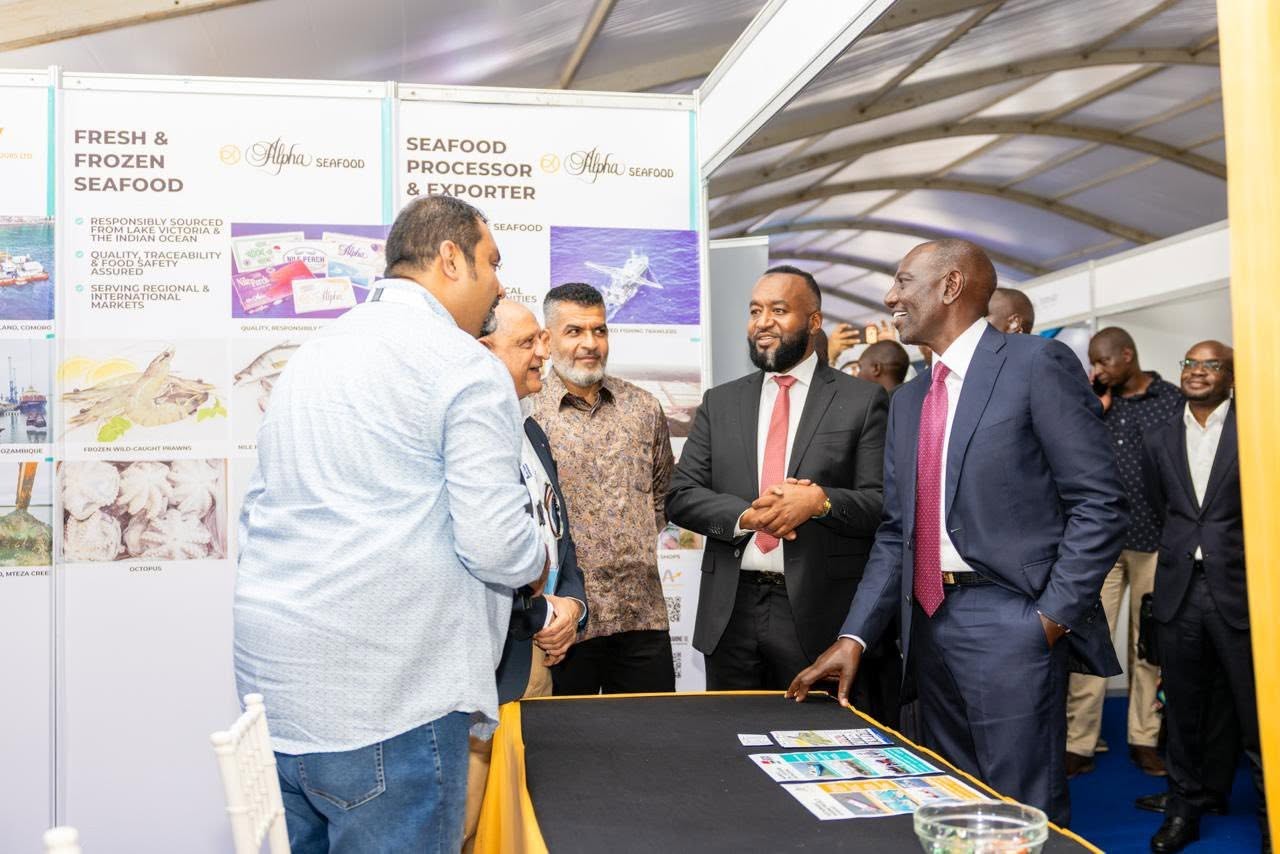
(From right) Kenya's President William Ruto, Cabinet Secretary for the State Department of Mining and the Blue Economy Hassan Joho, and Mombasa County Governor Abdulswamad Shariff Nasir visiting an exhibition booth during the 11th Our Ocean Conference held in June this year.
He noted that Kenya has made encouraging progress but warned that policy commitments must now be translated into implementation.
"Kenya has made good progress. The Marine Spatial Plan is in its final stages of development, and the African Union's Agenda 2063 recognizes the blue economy as a key pillar for job creation and economic transformation across the continent. But those aspirations will remain just that—aspirations—unless we put in place the right policies, institutions, and supporting structures to make them work."
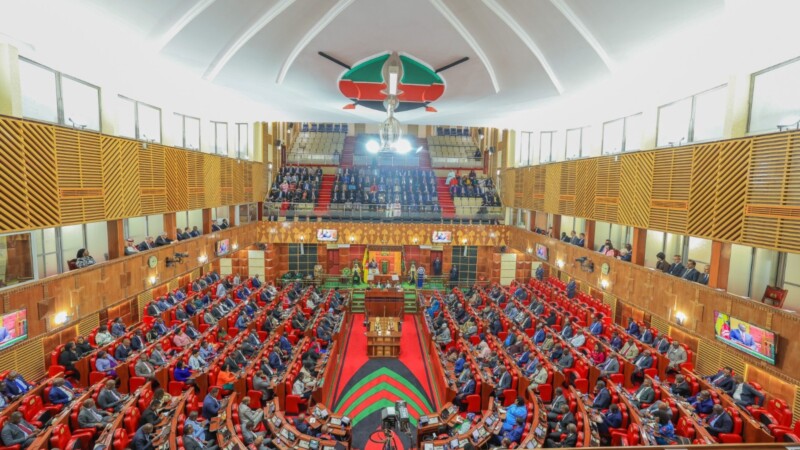
That challenge extends beyond governments. Commitments announced at the Our Ocean Conference must move beyond declarations and become measurable actions that improve the lives of coastal communities, strengthen ocean businesses, and accelerate marine conservation.
The Role of Investors, Development Partners and Corporates
Development organizations have an important role in reducing investment risks, supporting blended finance, strengthening entrepreneur support organizations, and facilitating collaboration across countries.
Investors must also rethink how they evaluate African ventures. The report found that nearly two-thirds of African ocean startups identified unsuitable financing instruments as one of their biggest barriers to growth. This suggests the issue is not necessarily a shortage of investment capital but rather the absence of financial products suited to African market conditions.
Corporates, meanwhile, have the opportunity to become customers, strategic partners, mentors, and supply chain collaborators. By purchasing innovative products, opening procurement pathways, investing in infrastructure, and supporting pilot projects, businesses can help promising startups move beyond experimentation and into sustainable commercial growth.
What Success Will Look Like
The success of 1000 Ocean Startups Africa will not be measured simply by the number of startups that join the network.
Its true impact will be determined by whether Africa develops an ocean innovation ecosystem where entrepreneurs can access finance more easily, collaborate across borders, scale solutions that protect marine ecosystems, and create sustainable livelihoods for coastal communities.
The coalition's long-term vision is to replace fragmented efforts with coordinated action, creating stronger connections between entrepreneurs, investors, governments, and industry. By improving trust, visibility, and collaboration, the initiative hopes to unlock the full potential of Africa's blue economy while ensuring ocean conservation and economic development advance together.
Allan Kai is a fisheries and conservation reporter for Blue Radio. He brings a wealth of experience in marine and fisheries reporting, having collaborated with various media houses and environmental organizations. Allan has a proven knack for crafting impactful stories that connect local communities with nature. For inquiries, please contact him at allankaigari@gmail.com.