By Johnson Mwangangi | Blue Radio | Gilitics Media
I am sitting in a classroom at the Gordon Institute of Business Science in Johannesburg.
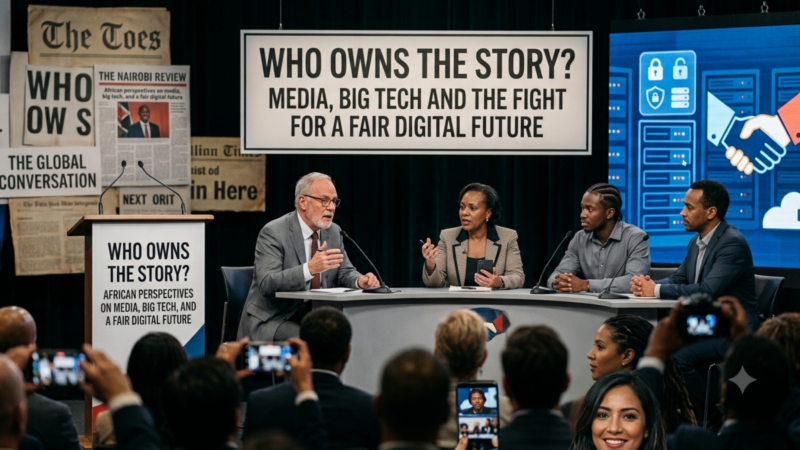
Outside this window is one of Africa's most sophisticated business school campuses. Inside the room is a cohort of senior media professionals from across the continent editors, broadcasters, digital strategists, media executives all here for the same reason. We are trying to figure out how to keep independent media alive in an era that seems structurally designed to make that harder every year.
One of this week's module is about fair compensation for news. About the regulatory, market-based and multilateral mechanisms being used across the Global South to force digital platforms to pay for the content they have built empires on.
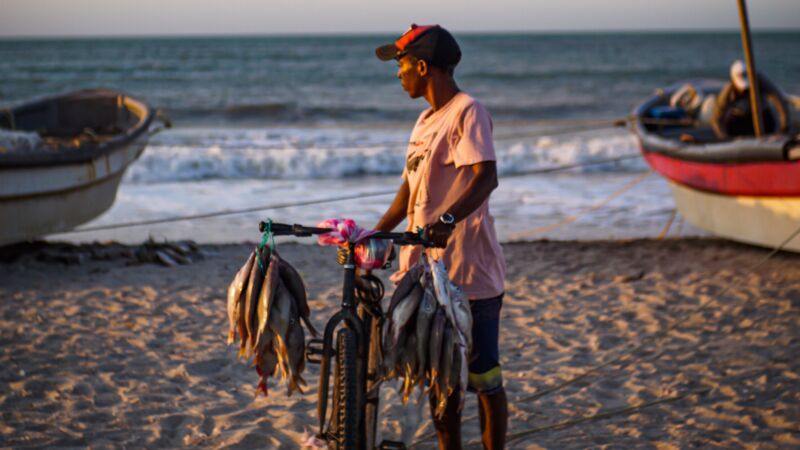
And sitting here, taking notes on South Africa's Media and Digital Platforms Market Inquiry, on UNESCO's Draft Guidance on Fair Compensation for News, on Indonesia's pivot from international copyright strategy to domestic sovereign approach I keep thinking about Gilitics Media. About the digital media company I have been building in Mombasa producing content, covering events, running Blue Radio, telling coastal stories while Meta and Google quietly built the most profitable advertising businesses in human history on the back of content produced by people like me.
About the six years I spent building a coastal media platform in Mombasa while Meta and Google quietly built the most profitable advertising businesses in human history on the back of content produced by people like me.
This article is my attempt to think through what is happening clearly enough for anyone to understand and deeply enough to be honest about the stakes.
The Bargain That Was Never a Bargain
When the internet arrived it came with a promise.
Publish your content online and the world will find it. Build an audience and advertisers will pay to reach them. The digital age would democratise media lower the barriers to entry, expand the reach of independent voices and create a more diverse information ecosystem than broadcast and print had ever allowed.
Parts of that promise were true. Blue Radio exists because internet radio costs a fraction of what an FM licence and transmitter require. The barriers to entry did fall. Voices that would never have accessed traditional media infrastructure got platforms.
But the advertising revenue that was supposed to follow the audience did not go to the publishers. It went to the platforms.
Google and Meta became the intermediaries between content and audience and in doing so they captured the economic value of that intermediation at a scale that has no precedent in the history of media. Today Google controls roughly 90% of the global search advertising market. Meta controls the social media attention economy that determines what content reaches what audience on what timeline. Between them they have taken a bite out of the media industry's revenue base that has left newsrooms across the world smaller, less resourced and more precarious than at any point in the past fifty years.
The bargain was never a bargain. It was a migration. Publishers moved their audiences to platforms and the platforms kept the money.
How Content Became Fuel
The advertising story is only the first layer of what happened.
The second layer is more recent and in some ways more alarming.
The large language models and generative AI systems that have reshaped the technology landscape in the past three years the systems that write text, summarise articles, answer questions and increasingly substitute for the kind of information-seeking behaviour that used to drive traffic to news websites were trained on content. Enormous quantities of it. Articles, investigations, analyses, features, opinion pieces, creative writing, journalism of every kind scraped from the internet and used as training data without compensation, without consent and without acknowledgement in most cases.
The Nigerian Press Organisation, in its petition to the Federal Competition and Consumer Protection Commission in July 2026, described this as digital cannibalism tech firms consuming the content that media organisations spent years and significant resources producing, using it to build AI products that then compete directly with those same media organisations for audience attention.
That is not a metaphor. It is a description of what actually happened.
A journalist spends three weeks investigating a story. The story is published. It is scraped by an AI training pipeline. The AI learns from it. The AI then answers questions about the topic the journalist investigated without attribution, without payment, without any acknowledgement that the knowledge came from somewhere and that somewhere had a cost.
The knowledge economy is being strip-mined. And the people doing the mining are the most profitable companies in human history.
Africa Fights Back In Court, In Regulation, In Policy
What makes this moment genuinely different from previous cycles of media disruption is that African institutions are not waiting for solutions to arrive from elsewhere.
They are building them.
In South Africa, the Media and Digital Platforms Market Inquiry a process that took years and generated significant institutional pressure produced a landmark settlement. Google agreed to a R688 million support package over five years. The package includes a Digital News Transformation Fund to help small and community media navigate the digital transition, the Google News Showcase to compensate national publishers for their content, and an AI Innovation Fund to support the use of artificial intelligence in newsrooms.
Is it enough? No. Experts who have examined the settlement closely note that a single national regulator cannot re-engineer global platform architecture. The structural questions around AI training data licensing remain unresolved and will require future legislation to address. But the settlement establishes something important a precedent that African regulators can compel compensation from global platforms and that the competition framework is a viable tool for doing so even where copyright law is insufficient.
In Kenya, the battleground is the courtroom rather than the competition commission. A Kenyan judge made a world-first ruling declaring Meta the true employer of its outsourced content moderation workers rather than the third-party contractor that formally employed them. Over 140 of those moderators have been diagnosed with severe PTSD after years of viewing graphic content murder, rape, child abuse as part of the moderation work that makes Meta's platforms usable for everyone else.
The ruling holds Meta legally responsible for that harm. It pierces the contractual veil that technology companies have used to insulate themselves from the human consequences of their business models.
Simultaneously a Kenyan court ruled it has jurisdiction to hear claims that Meta's algorithms actively fuelled ethnic violence in Ethiopia during the Tigray conflict by amplifying hateful content. If that case proceeds and succeeds it will establish something that courts in the United States and Europe have consistently refused to accept that platforms bear meaningful legal responsibility for the real-world consequences of their algorithmic decisions.
In Nigeria, President Bola Tinubu ordered a major investigation in July 2026 into Meta, Google, X and generative AI platforms following the Nigerian Press Organisation's petition. This came after Nigeria's competition authority had already fined Meta $220 million in 2025 for data privacy violations and abuse of market dominance.
Three countries. Three different legal and regulatory frameworks. Three different entry points into the same fundamental argument: that the current arrangement between global technology platforms and African media, creators and communities is unjust and must change.
The International Architecture And Its Limits
Learning about the international dimension of this fight from inside a GIBS classroom adds a layer to my understanding that I did not have before.
The UNESCO Draft Guidance on Fair Compensation for News currently open for consultation until July 30 2026 represents an attempt to build global consensus around the principle that news publishers deserve fair compensation from the platforms that distribute and benefit from their content. UNESCO cannot enforce anything. It has no regulatory teeth. But it can establish norms, provide legitimacy to national regulatory efforts and create the international consensus that makes domestic action more defensible when challenged by platforms with the resources to litigate endlessly.
The CTRL+J alliance linking media policy efforts in South Africa, Brazil and Indonesia is a different model. A tricontinental coalition of countries in the Global South coordinating their approaches, sharing lessons and amplifying each other's regulatory efforts in international forums. When three significant emerging markets move in the same direction simultaneously the platforms cannot simply route around one country's regulations.
Indonesia's story is particularly instructive. The country originally pursued a single international framework through WIPO that would cover music, audiovisual content and journalism simultaneously. That ambition narrowed the Jakarta Protocol that emerged covers musical works only because journalism sits in a different legal position from music under international copyright law. The Berne Convention's long-standing exception for news of the day means that journalism as a category is poorly suited to the same international copyright route that music has successfully used.
So Indonesia pivoted. For music, the international route. For journalism, a domestic sovereign strategy built on mandatory licensing, algorithmic transparency requirements and a specialised collective management organisation.
That split tells you something important about the nature of the fight. There is no single solution. The legal and regulatory tools that work for one category of content in one jurisdiction may not work for another. The fight for fair compensation for journalism specifically requires a combination of domestic legislation, competition law, multilateral norm-setting and judicial action simultaneously, across multiple fronts, over a period of years.
What This Means From Where I Sit
I run a radio station in Mombasa.
Blue Radio does not have the scale of the South African publishers who negotiated with Google. We do not have the resources to litigate against Meta in the Kenyan High Court. We are not invited to UNESCO consultations or WIPO working groups.
But we are part of the ecosystem that these battles are being fought over.
Every time a coastal community story that Blue Radio produces gets shared on Facebook and drives advertising revenue to Meta rather than to us, we feel the consequence of an unresolved fair compensation framework. Every time a listener finds our content through a Google search and Google captures the advertising value of that discovery, we feel it. Every time an AI system draws on journalism produced by small independent media outlets without compensation, the already thin margins of independent coastal media get thinner.
The question I am sitting with in this classroom the question I think every small and independent media organisation in Africa should be sitting with is not whether these battles matter. They clearly do. The question is how organisations like Blue Radio engage with processes and frameworks that feel distant from the daily reality of keeping a coastal radio station running.
The answer the GIBS module points toward is practical and worth stating directly.
Engage with the UNESCO consultation. Not because Blue Radio has the institutional weight to shape the outcome but because the consultation is a legitimate channel for the perspectives of small independent media to enter a global process. The guidance that emerges will reference the breadth of engagement it received. Our voice in it is part of what makes it credible.
Track the Kenyan court cases. The Meta employer ruling and the Ethiopia algorithm case are not just legal curiosities. They are establishing precedents that will define what accountability means for platforms operating in Kenya and Blue Radio operates in Kenya.
Build relationships with the regulatory and journalism advocacy organisations that are actively engaged in these processes the Media Institute of Southern Africa, the CTRL+J alliance, the African Media Initiative not as passive observers but as a media organisation with a direct stake in the outcomes.
And tell the story. The most important thing an independent coastal media platform can do in the middle of a global fight over the future of journalism is keep doing journalism and make sure the communities it serves understand what is at stake.
The Long Game
Nobody should expect this fight to be resolved quickly.
The platforms have extraordinary resources, sophisticated legal teams and a structural interest in maintaining the current arrangement for as long as possible. The regulatory processes are slow. The litigation is expensive. The international frameworks move at diplomatic pace.
But the direction of travel is clear and it is not reversing.
African courts are establishing jurisdiction over platform harms that US and European courts have refused to address. African regulators are extracting compensation agreements that set regional precedents. African governments are investigating platform conduct and imposing significant fines. And African media organisations small and large are finding their voice in international policy processes that have historically been shaped by the concerns of Western publishers.
This matters not just for African media. It matters for the global framework.
When Kenya's High Court rules that Meta is the true employer of its content moderation workers, that ruling enters the global legal conversation. When South Africa's competition commission negotiates a compensation package from Google, that settlement becomes a reference point for regulators in other jurisdictions. When Nigeria investigates digital cannibalism of news content by AI platforms, that investigation adds momentum to a global consensus that is slowly, unevenly but unmistakably building.
The future of the relationship between media publishers and big technology platforms will not be determined by a single ruling or a single settlement. It will be shaped by the accumulation of regulatory decisions, judicial precedents, international guidelines and market negotiations that are unfolding simultaneously across multiple jurisdictions over the coming decade.
Africa is not on the periphery of that process.
Africa is at the centre of it.
And the small independent media organisations doing journalism in coastal Kenya, in Lagos, in Johannesburg, in Nairobi the ones that cannot afford to be in the courtroom or the consultation room but whose survival depends on the outcomes have more at stake in how this plays out than anyone.
I came to Johannesburg to learn how to lead a media organisation more effectively.
I did not expect the most important lesson of the first week to be a reminder that the fight for the future of independent media is already happening and that being in the room where it is being taught is itself a form of participation.
The story belongs to the people who tell it.
It is time the economics caught up.
Johnson Mwangangi is the CEO and Co-Founder of Gilitics Media Limited and founder of Blue Radio Kenya's only dedicated blue economy radio station. He is currently attending the Executive Programme in Media Leadership at GIBS Gordon Institute of Business Science in Johannesburg. Tune in at www.blueradio.co.ke
Follow us on LinkedIn, X and Facebook @BlueRadioKE