By Allan Kai
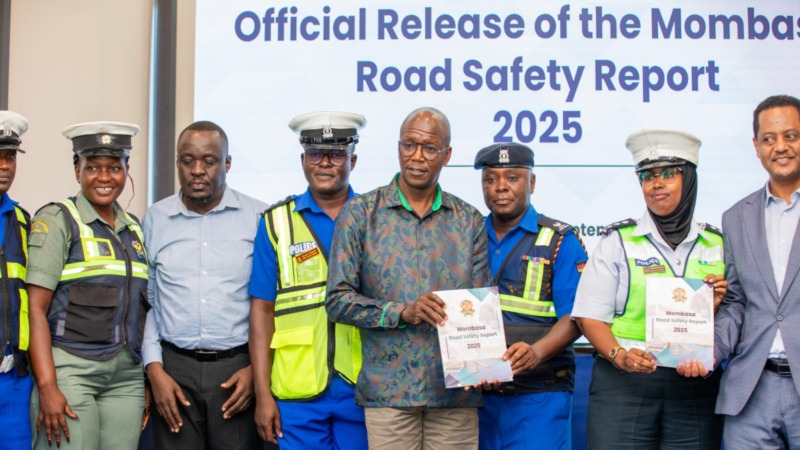
Mombasa County recorded a 15% decline in reported road traffic crashes and serious injuries in 2025 compared with the previous year, according to a new report launched by Deputy Governor Francis Thoya on Monday.
However, the Mombasa Road Safety Report 2025 shows that 84 people still died on the county’s roads, with pedestrians and users of two- and three-wheelers accounting for a substantial share of the fatalities.
The report, produced with support from global health organisation Vital Strategies under the Bloomberg Philanthropies Initiative for Global Road Safety (BIGRS), identifies the Mombasa–Nairobi and Mombasa–Malindi roads among the county’s highest-risk corridors.
Speaking at the launch, Thoya said the decline was an encouraging sign after years of road safety efforts, but warned that further progress would depend on sustained cooperation between government agencies and other stakeholders.
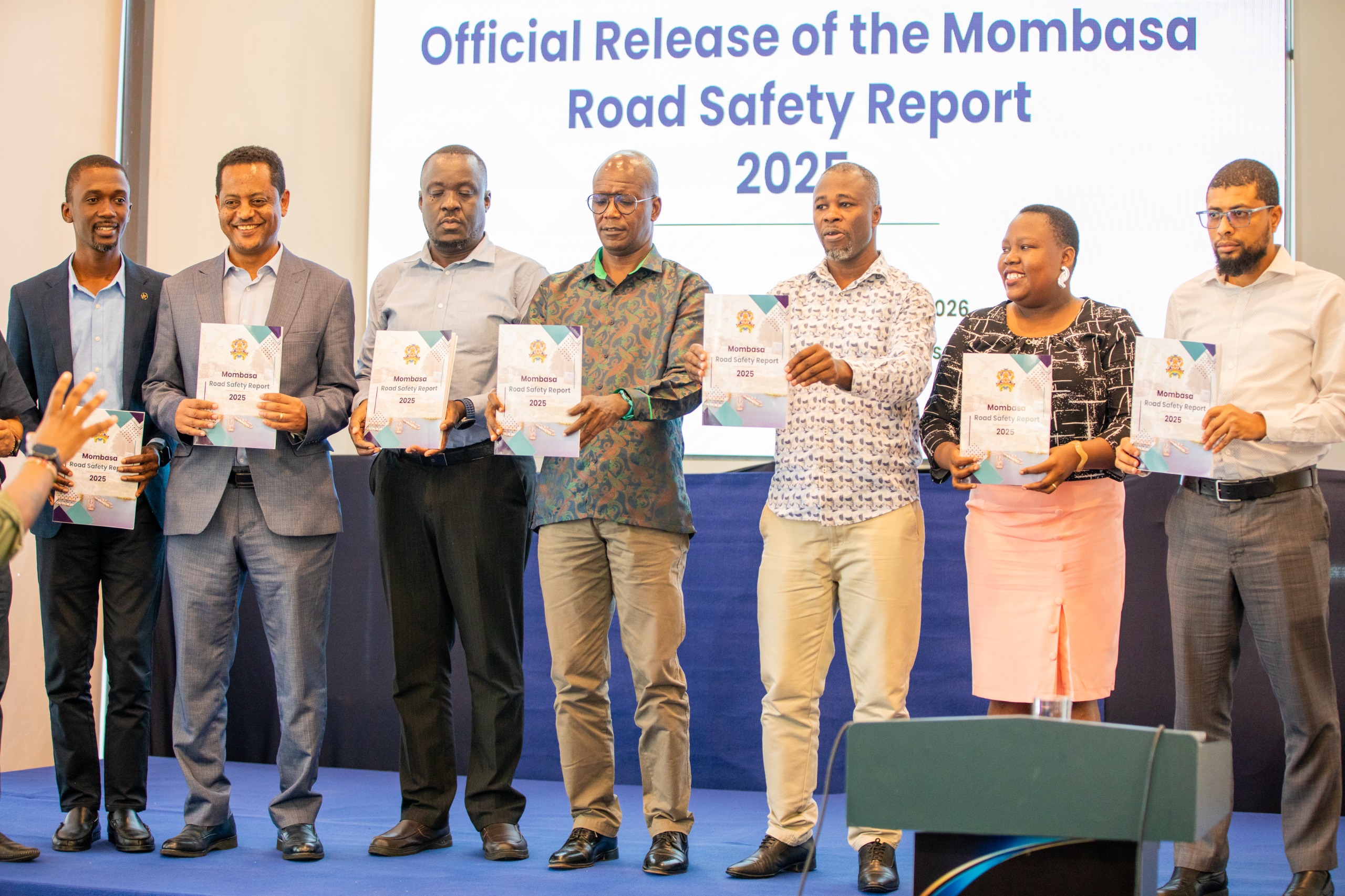
“Sustaining this progress will require renewed commitment from all stakeholders,” he said, urging the National Police Service, the National Transport and Safety Authority, county departments and development partners to mobilise resources and coordinate action.
The report identifies vulnerable road users as bearing a significant share of the road safety burden. Users of two- and three-wheelers accounted for 44% of reported deaths, while pedestrians made up 37%.
Men accounted for 86% of fatalities, while people aged 30 to 39 were frequently represented among those killed or seriously injured.
The findings also point to particular times when crashes were more likely to result in deaths. Saturdays recorded the highest number of fatalities, while crashes occurring in the early morning and late evening were frequently associated with deaths.
The report’s breakdown by time and day shows that the highest total was recorded on Saturdays, with 72 deaths across the reporting period from 2021 to 2025. The data also records substantial numbers of deaths during the evening period, between 8pm and midnight.
The report names five corridors with the highest numbers of fatal crashes between 2023 and 2025: Mombasa–Nairobi, Mombasa–Malindi, Makupa Causeway, Likoni–Ukunda and Port Reitz–Airport.

Mombasa–Nairobi recorded 65 deaths over the period, while Mombasa–Malindi recorded 44. Makupa Causeway had 21 deaths, followed by Likoni–Ukunda with 16 and Port Reitz–Airport with nine.
The report’s corridor figures also highlight the importance of considering the length of each road section. Mombasa–Malindi, for example, recorded 7.1 deaths per kilometre, compared with 4.1 per kilometre on the Mombasa–Nairobi corridor.
Mombasa County Traffic Officer Antony Nyongesa said the findings would help authorities direct enforcement, public awareness campaigns and infrastructure improvements towards locations and road users facing the greatest risks.
He said enforcement alone would not be enough, pointing to the need for safer road engineering, public education, informed planning and collaboration among agencies.
A post-campaign survey cited in the release found that 84% of respondents considered speeding the leading perceived cause of crashes. The survey also found support for lower speed limits, with 77% backing a 30km/h limit in residential areas and 71% supporting lower limits near pedestrian areas.
Mombasa County says it is continuing its road safety work through mass media campaigns, journalist training, capacity building for enforcement officers and infrastructure improvements intended to accommodate different road users.
Vital Strategies’ Regional Technical Advisor for Africa on Road Injury Surveillance, Dr Raphael Awuah, said the report offered evidence to guide policy, infrastructure planning and targeted interventions.
He said the analysis examined crash patterns, vulnerable road users, high-risk locations and behavioural factors, with the aim of helping authorities make decisions that could reduce deaths and serious injuries.
The county announced in April 2026 that it would continue participating in BIGRS, a collaboration supporting road safety policies, infrastructure improvements, connected cycling networks and efforts to reduce speeding.

The reported improvement comes with a caveat: the press release describes a 15% decline in reported crashes and serious injuries, but does not clearly establish that road fatalities themselves fell by 15%. It also cautions that a single year’s change is not enough to establish a sustained trend. Continued monitoring will be needed to determine whether the gains persist.