A $16 billion heavy fossil-fuel industrial engine is landing directly on Kenya's fragile coastal doorstep. Will coastal communities become genuine partners in this value chain—or passive observers to environmental disruption?
By Johnson Muema Mwangangi
Co-Founder & CEO, Gilitics Media | Founder, Blue Radio
Mokowe / Lamu, Kenya
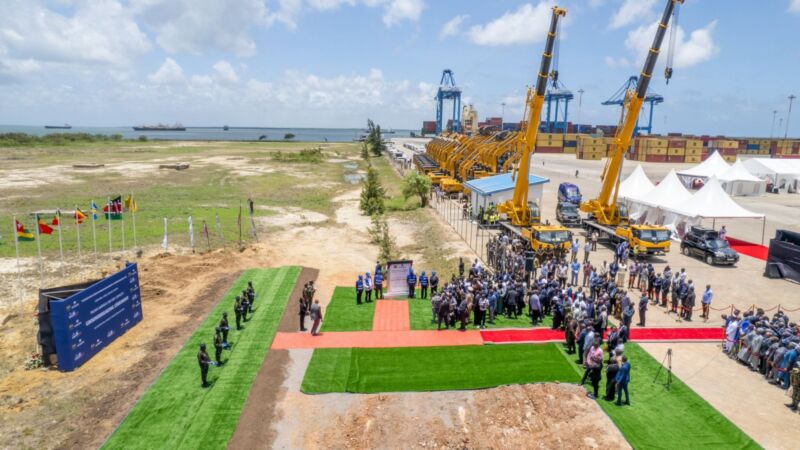
When President William Ruto and Aliko Dangote broke ground on the $16 billion East African Petroleum and Petrochemicals complex in Mokowe on September 30, 2026, the official narrative was clear: an industrial turning point that could add 12 percent to Kenya’s GDP and redefine regional energy independence.
It represents the largest single foreign direct investment in the nation’s history. Yet on the ground in Lamu, the mood carries a distinct edge of friction.
Across the channel, artisanal fishers navigate waters that yield 2,200 metric tonnes of fish annually across 28 landing sites—an ecosystem that directly supports 80 percent of the local population. For these communities, a 700,000-barrel-per-day refinery, a 1,000-megawatt captive power generation facility, and offshore tanker moorings are not abstract macroeconomic figures. They are physical interventions in traditional marine waterways, critical breeding grounds, and delicate coastal freshwater aquifers.
The critical question facing coastal stakeholders, entrepreneurs, and young people today is not whether this mega-project should exist—the earthmovers are already on-site. The real question is: Will coastal communities remain bystanders in their own home, or will they claim a direct stake in the value chain while safeguarding the marine resources that sustain them?
The Industrial Reality vs. Coastal Ecosystems
The scale of the Dangote complex inside the LAPSSET corridor is staggering. Incorporating heavy crude petro-refinement, power generation, and chemical manufacturing, the site is engineered to anchor East Africa’s long-term fuel self-sufficiency.
However, heavy industrialization poses direct and immediate conflicts with a thriving coastal blue economy:
Navigational and Fishing Space: The placement of offshore Single Point Mooring Buoys (SPMB) and deep-water shipping lanes directly intersects with vital local channels like the Mkanda Channel and Faza waterway. Without strictly enforced marine corridors, traditional small-craft navigation and artisanal fishing grounds face real operational displacement.
Ecological Integrity: Dredging activities and industrial wetland clearing directly threaten mangrove estuaries and coral reefs—the natural nurseries for local fish stocks and nesting habitats for IUCN-listed sea turtles.
Resource Demands: Heavy industrial facilities and an influx of tens of thousands of workers put immediate pressure on mainland infrastructure, raising sharp concerns over unresolved land rights claims and groundwater extraction that could stress delicate coastal reserves like the Shela Aquifer.
"Industrial expansion cannot occur at the total expense of the natural economy that has sustained Lamu for centuries."
Strategic Ecosystem Framework
Integrating the Dangote Refinery with coastal enterprise and mandatory blue safeguards.
DANGOTE LAMU REFINERY COMPLEX $16B • 700k bpd • 1,000 MW Captive Power COMMUNITY & YOUTH OPPORTUNITIES Technical Trades & Fab Certification ❄️ Offtake Power for Cold Storage ️ Logistics & Marine Passenger Transit MANDATORY BLUE SAFEGUARDS⚓ Dedicated Fishing Port in LAPSSET Deep-Sea EEZ Fleet Upgrades Community-Led Impact Audits
Where the Real Opportunities Lie for Coastal Youth and Investors
If coastal stakeholders wait for trickle-down benefits to appear organically, they will be left behind. The 50,000 projected direct and indirect positions will not automatically translate into regional wealth creation unless coastal youth and local entrepreneurs strategically target the supporting industrial ecosystem.
1. Technical Trade and Supply Chain Services
While the announcement of an engineering training center in Lamu by the Dangote Group provides a baseline, young people must aggressively pursue accredited certifications in heavy equipment maintenance, maritime logistics, industrial pipefitting, and environmental remediation. The industrial supply chain will require everything from specialized boat maintenance to commercial catering, industrial waste handling, and raw material logistics.
2. Captive Power and Cold-Chain Synergies
The refinery’s planned 1,000 MW power generation facility is designed to offload up to 500 MW into the national grid. This massive surge in local energy capacity can resolve one of coastal Kenya’s most persistent economic bottlenecks: the absence of reliable, affordable cold-storage infrastructure for marine catch. Young entrepreneurs should focus on leveraging this grid expansion to establish commercial-scale cold storage facilities for fish landing sites, processing units, and agricultural packaging centers in Mokowe.
3. Hospitality and Marine Logistics Expansion
With Manda Airport experiencing increased passenger traffic and mainland accommodations hitting capacity during site preparation, local hospitality investors and water transport operators must modernize. Professionalizing marine passenger transit between Mokowe and Lamu Island offers immediate, highly sustainable revenue streams for local operators who upgrade vessel safety and operational standards.
Mandatory Blue and Green Economy Safeguards
Economic growth without strict environmental governance is an empty promise. Civil society organizations have rightfully pointed out the inherent tension of building a $16 billion fossil-fuel refinery in an era defined by global climate transition goals.
To ensure the refinery complex does not undermine the foundational blue economy, three non-negotiable safeguards must be enforced by county and national leaders:
Dedicated Marine Infrastructure for Fishers: Strategic Environmental Assessment (SEA) guidelines must be strictly honored, including the accelerated construction of modern, dedicated fishing ports away from industrial shipping lanes to ensure fishers retain safe, unobstructed access to open sea waters.
Deep-Sea EEZ Fleet Modernization: Artisanal fishers currently limited to shallow inshore waters need targeted technical training, commercial vessels, and safety equipment to expand their operations into Kenya’s lucrative Exclusive Economic Zone (EEZ).
Independent Environmental Monitoring: Rigorous environmental audits—covering marine water quality, mangrove restoration, and atmospheric emissions—must directly involve local civil society and community leaders, moving beyond internal corporate reporting.
The Uncomfortable Question
As heavy earthmovers continue shaping the Mokowe mainland, policymakers, investors, and corporate leaders must confront a fundamental question:
Will this $16 billion landmark investment serve as a genuine economic catalyst that elevates coastal youth and fishers into long-term maritime partners—or will it remain an isolated industrial enclave that exports wealth while leaving local communities to absorb the environmental damage?
The answer will not be found in glossy Nairobi investor decks or political speeches. It will be decided by whether local youth are trained and hired, whether community land claims are settled transparently, and whether the marine environment that feeds thousands of coastal families is protected with the exact same urgency as the refinery itself.
Our website uses cookies and other technologies so that we and our partners can remember you and understand how you use the website. By continuing to browse this site, you will be deemed to have implied consent to our privacy policy.